
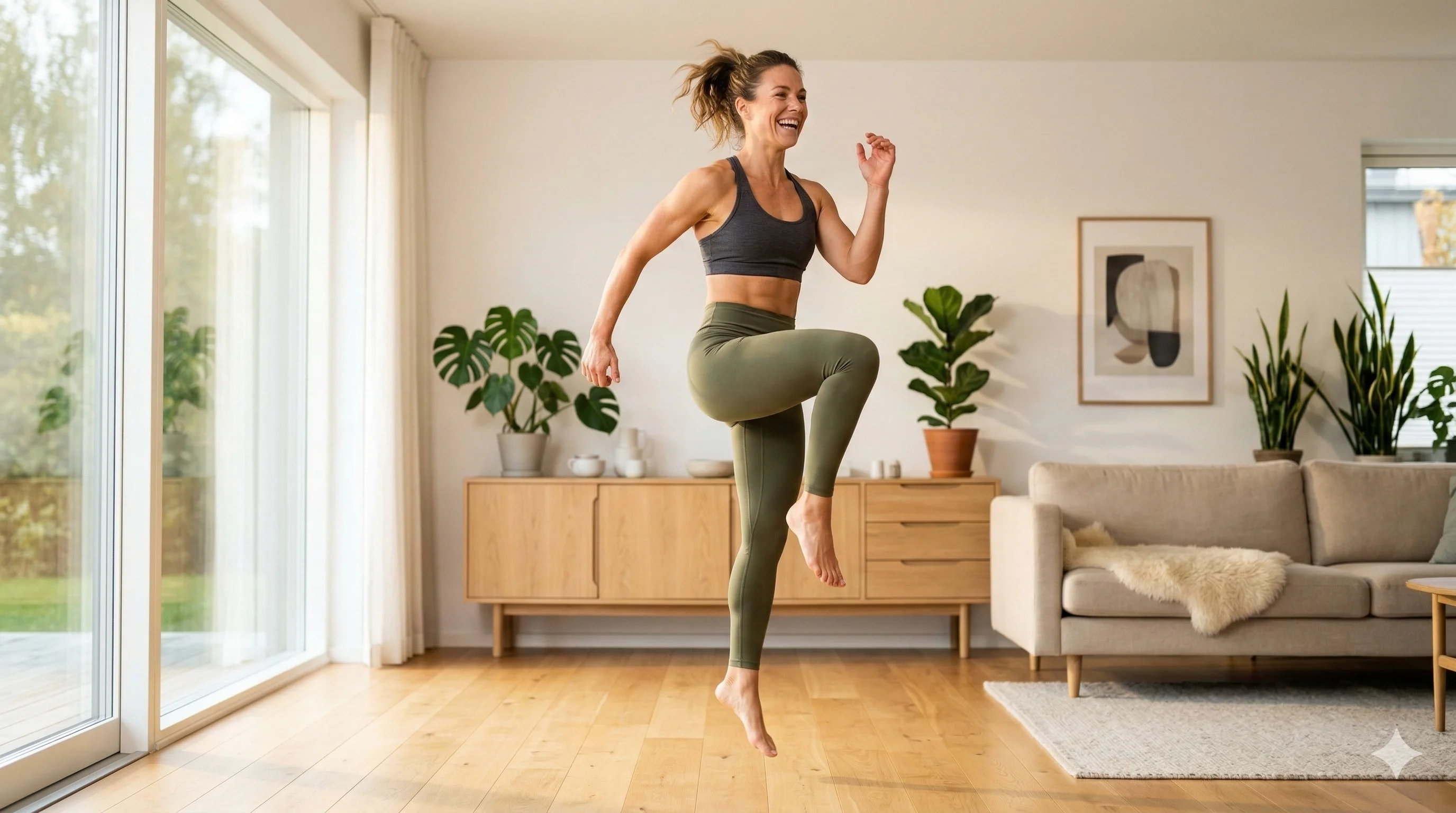
The classic warm-up exercise. Jumping jacks combine a jump with a simultaneous spread of arms and legs in a rhythmic movement that quickly activates the cardiovascular system. Simple, effective and accessible to all levels.
Execution
Stand with feet together, arms at your sides. In a single jump, spread your feet to about one and a half times shoulder-width while raising your arms laterally overhead (hands meet or nearly meet at the top). Return to the starting position with a second jump: feet together, arms at your sides. The movement is fluid and continuous; arms and legs synchronize perfectly. Land on the balls of your feet with your knees slightly bent to absorb each jump.
Breathing
Inhale as you spread your arms and legs; exhale as you return to the starting position. Your breathing rhythm adapts naturally to the movement cadence — keep it fluid and steady.
Benefits
- •Full-body warm-up in seconds: simultaneously activates cardio, shoulders and legs
- •Improves arm-leg motor coordination and sense of rhythm
- •Zero equipment, zero complex technique: accessible from the very first session
- •Engages the adductors and deltoids, often undertrained in classic routines
- •Quickly raises heart rate to prepare the body for more intense effort
Variants
Star jumps
Explosive jump where arms and legs spread as wide as possible in the air to form a star. More intense than standard jumping jacks, this variation develops power and engages glutes and shoulders more.
Our tips
- 1.Keep your knees slightly bent on landing to protect your joints
- 2.Arms rise straight out to the sides, not in front of you — the movement comes from the shoulders
- 3.Stay on the balls of your feet, never land heel-first
- 4.Find a steady, sustainable rhythm rather than going maximum speed from the start
Common mistakes
- •Landing on your heels — creates excessive impact on knees and ankles. Stay on the balls of your feet.
- •Arms passing in front of the body instead of rising laterally — reduces deltoid work and breaks the rhythm
- •Stiff knees on landing — always bend your knees slightly to absorb the impact
- •Too small a range of motion (hands don't reach overhead) — perform the full movement for effective work
- •Irregular or jerky rhythm — maintain a constant, fluid cadence to maximize the cardiovascular effect